
Buyer's Desk
GE vs Siemens Refurbished PET/CT Scanners: A Buyer's Comparison Guide
April 9, 2026 · 6 min · Medical Imaging Specialists
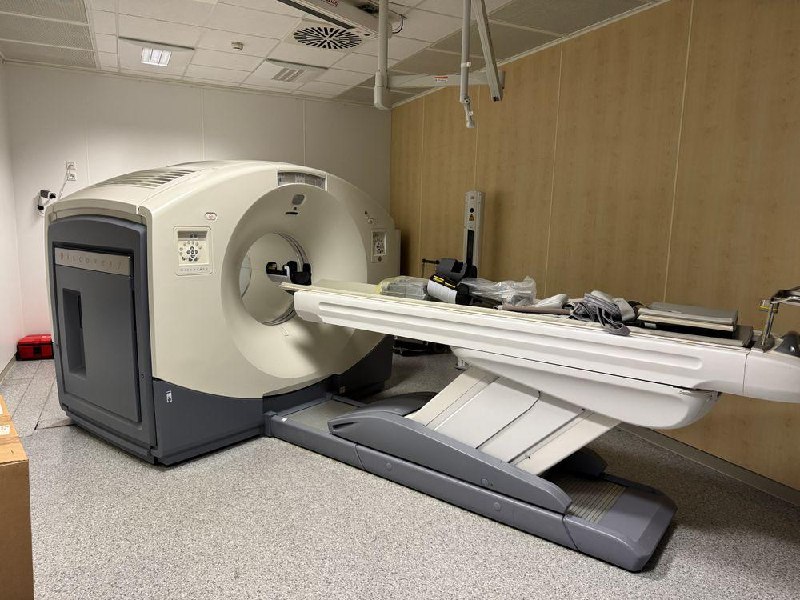
Practical considerations, risk points, and what to ask before you buy, service, move, or maintain imaging equipment.
If you’re in the market for a refurbished PET/CT scanner, you’ve probably narrowed your search to two names: GE Healthcare and Siemens Healthineers. These two OEMs dominate the pre-owned PET/CT market, each offering systems with distinct strengths depending on your clinical volume, patient mix, and budget.
This guide breaks down the key differences between refurbished GE and Siemens PET/CT scanners so you can make a confident, informed purchasing decision.
Why PET/CT — and Why Refurbished?
PET/CT imaging combines the metabolic sensitivity of positron emission tomography with the anatomical detail of computed tomography. It’s the gold standard for oncology staging, treatment response monitoring, and cardiac viability studies. For facilities expanding into molecular imaging or replacing aging equipment, a refurbished PET/CT scanner offers access to proven clinical technology at 40–60% below new system pricing.
Both GE and Siemens have long track records in this space, and their refurbished units are widely available with solid parts support — making either brand a viable option for most buyers.
GE PET/CT Systems: What to Know
GE’s PET/CT lineup includes the Discovery series, which has been a workhorse in oncology imaging for over a decade. Common refurbished models include:
- GE Discovery ST — A proven 4-, 8-, or 16-slice PET/CT platform. Widely available on the secondary market with strong parts supply. A solid entry point for facilities starting a PET/CT program.
- GE Discovery STE — An evolution of the ST with improved PET sensitivity and faster acquisition. Still uses BGO (bismuth germanate) detectors but delivers reliable clinical performance.
- GE Discovery 600 / 610 / 690 — These systems introduced GE’s transition toward newer detector materials and time-of-flight (TOF) capability (690). The Discovery 690, in particular, uses LYSO crystals and TOF reconstruction, offering a significant image quality jump.
- GE Discovery IQ — A newer-generation system with longer axial field of view and excellent sensitivity. Still relatively scarce on the refurbished market but worth watching.
GE strengths:
- Large installed base means abundant parts and experienced third-party service engineers
- BGO-based systems (ST, STE) are affordable and well-understood
- Discovery 690 and newer offer competitive TOF imaging
- GE’s Q.Clear reconstruction algorithm (on compatible systems) improves lesion detectability
Considerations:
- Older BGO systems lack time-of-flight, which can limit image quality in larger patients
- GE’s proprietary software licensing can add cost if you need clinical application upgrades
Siemens PET/CT Systems: What to Know
Siemens has been a strong competitor in PET/CT, particularly with its Biograph series. Common refurbished models include:
- Siemens Biograph 6 / 16 — Early-generation Biograph systems with LSO (lutetium oxyorthosilicate) detectors. Even these older units benefit from Siemens’ early adoption of faster scintillator materials.
- Siemens Biograph TruePoint — Available in 6-, 16-, and 40-slice CT configurations. TruePoint introduced TrueV, an extended axial field of view option that increases PET sensitivity by up to 76%.
- Siemens Biograph mCT — A significant leap forward. The mCT features time-of-flight capability, HD·PET reconstruction, and is available with up to 128-slice CT. It’s one of the most sought-after refurbished PET/CT systems on the market.
- Siemens Biograph Horizon — A newer compact system designed for cost-efficiency. Limited refurbished availability currently, but entering the secondary market.
Siemens strengths:
- Early and consistent adoption of LSO detectors across the Biograph line, offering faster decay times and better count rate performance than BGO
- TruePoint/TrueV extended axial coverage improves throughput and dose efficiency
- Biograph mCT with TOF is a top-tier refurbished PET/CT option
- Strong reconstruction algorithms including HD·PET and ultraHD·PET
Considerations:
- Siemens parts can carry higher price tags on the secondary market compared to GE equivalents
- Smaller refurbished inventory in some configurations
- Service support from independent organizations is available but may require more specialized expertise
Head-to-Head: Key Comparison Points
Detector Technology
This is the single biggest differentiator on older systems. Siemens adopted LSO crystals early, giving even their older Biograph units faster photon detection and better timing resolution. GE’s older Discovery systems use BGO, which is reliable but slower. On newer platforms (GE Discovery 690 and later vs. Siemens Biograph mCT), both manufacturers offer LYSO/LSO-based TOF systems and the performance gap narrows significantly.
Bottom line: If you’re buying an older, budget-friendly refurbished PET/CT, Siemens’ LSO advantage matters. At the TOF tier, both brands deliver excellent PET image quality.
CT Component
Both manufacturers pair their PET systems with capable CT scanners. GE’s Discovery line often uses their BrightSpeed or LightSpeed CT platforms, while Siemens integrates Sensation or Definition-series CT technology into the Biograph. For most PET/CT applications, the CT is used primarily for attenuation correction and anatomical localization, so a 16-slice CT is typically sufficient. If you need the CT for standalone diagnostic work, look at 40-slice and above configurations.
Throughput and Sensitivity
Facilities running high patient volumes should prioritize PET sensitivity and axial field of view. Siemens TrueV-equipped systems and GE’s Discovery IQ offer extended axial coverage. For standard clinical volumes (8–12 patients per day), most mid-tier refurbished systems from either brand will perform well.
Service and Parts Availability
GE’s enormous installed base gives it an edge in parts availability and independent service options. Discovery ST and STE parts are plentiful and competitively priced. Siemens Biograph parts are available but often come at a premium, particularly for mCT-specific components. When evaluating total cost of ownership, factor in not just the purchase price but ongoing parts and service costs for the specific model you’re considering.
Software and Reconstruction
Both OEMs offer advanced reconstruction options, but software licensing and upgrade availability vary by model and by whether you’re buying from an OEM-certified refurbished program or an independent reseller. Ask your vendor specifically about what software packages are included and what additional licenses may be needed for your clinical applications.
Which System Is Right for Your Facility?
Choose a refurbished GE PET/CT if:
- Budget is the primary driver and you want a reliable, affordable entry point (Discovery ST/STE)
- You want abundant parts supply and widespread independent service coverage
- You’re upgrading to TOF and want the Discovery 690 at a competitive refurbished price
Choose a refurbished Siemens PET/CT if:
- PET image quality on older systems is a priority (LSO detector advantage)
- You want extended axial coverage with TrueV
- You’re targeting the mCT as a high-performance refurbished TOF system and have budget to support Siemens service costs
Either brand works well if:
- You’re a mid-volume oncology center looking for a reliable refurbished PET/CT in the TOF tier
- You have a strong service partner or in-house biomedical engineering team
Make the Right PET/CT Investment
A refurbished PET/CT scanner is a major capital decision — often $300,000 to $900,000+ depending on configuration and age. The right choice depends on your clinical needs, patient volume, service infrastructure, and long-term budget.
Medical Imaging Specialists has been buying, refurbishing, and supporting PET/CT, CT, and MRI systems since 2004. We maintain in-house parts inventory, employ experienced field service engineers, and work with facilities across the U.S., Caribbean, and Latin America. Whether you’re comparing specific models or just starting your search, our team can help you evaluate your options and find the right system for your facility.
Contact Medical Imaging Specialists →
Related Reading
Need help with this exact problem?
Send the modality, site location, timeline, and any system details. MIS will route the request by intent.
Related resources
Buyer's Desk
What Affects Used Medical Imaging Equipment Resale Value?
Used imaging equipment resale value depends on model, condition, records, accessories, demand, supportability, and removal complexity.
Buyer's Desk
What Questions Should You Ask Before Buying a Used MRI?
Before buying a used MRI, ask these equipment, service, site, logistics, parts, and quote questions to avoid expensive surprises.
Buyer's Desk
What to Look for When Buying a Used CT Scanner
Buying a used CT scanner? Check tube life, service history, parts support, site fit, software, installation scope, and post-sale service.